Which Anti-Aging Treatment Is Right for Your Skin and Stage of Life?

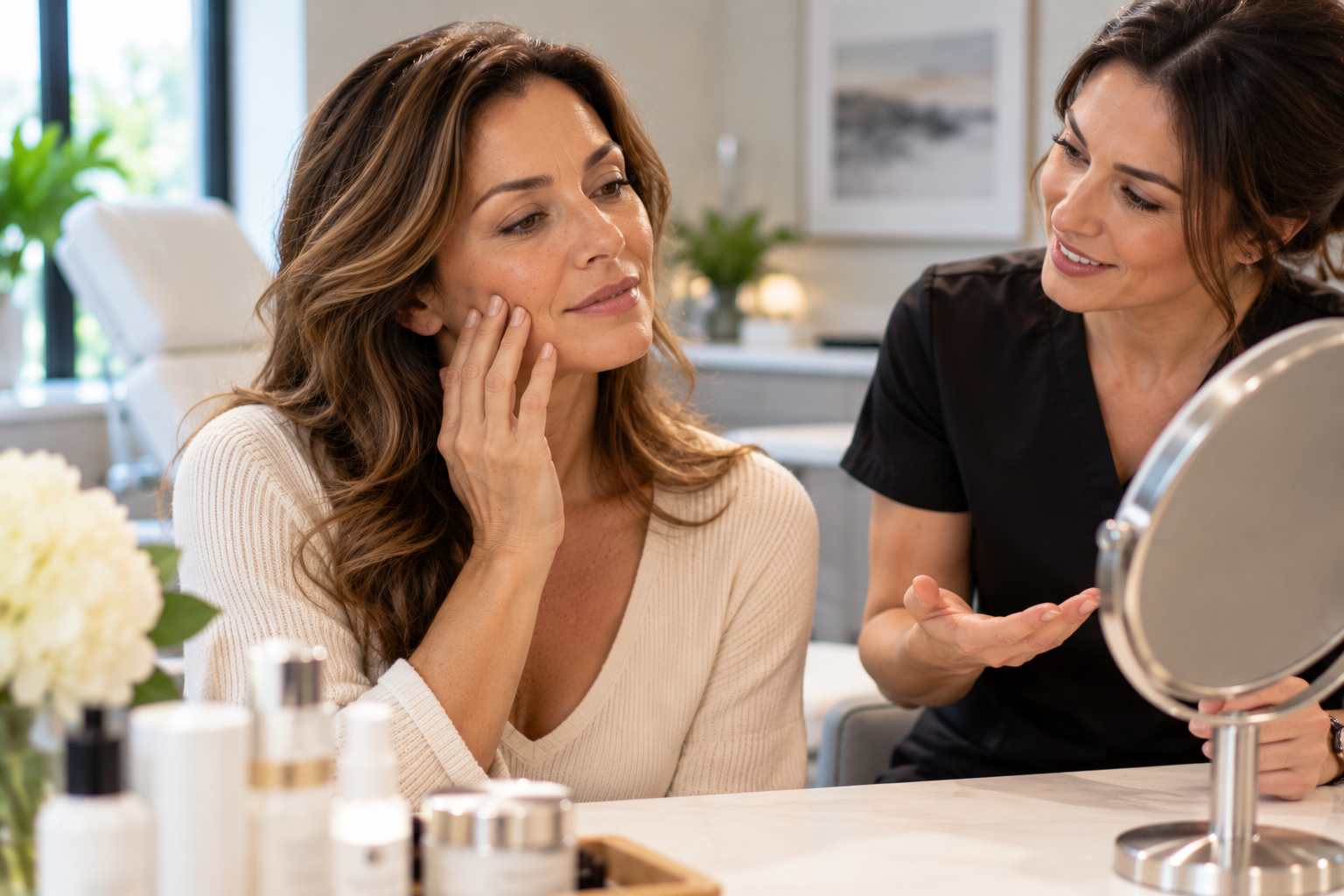
Somewhere in your late 30s or 40s, the skincare routine that worked for years starts to feel less convincing. Lines appear in places that used to be smooth, your complexion looks less even, and the face in your photos seems a little softer. Updated October 2026, this guide breaks down how anti-aging treatment options differ so you can match the right approach to what you are actually noticing.
If you live in Orlando, there is an extra factor to consider. Year-round sun is a major contributor to visible skin aging, so the best plan usually pairs treatment with consistent protection.
Why Does Skin Seem to Change So Noticeably in Midlife?
Skin changes in midlife because collagen and elastin decline, facial fat pads shift, and years of sun and expression leave their mark. Hormonal changes that begin in the late 30s can coincide with these shifts, although they are only one part of the picture.
MedlinePlus describes aging skin as thinner, with less underlying fat and reduced strength and elasticity, most pronounced in sun-exposed areas, and calls sun exposure the greatest single factor in skin aging. Mayo Clinic notes that the ovaries begin making less estrogen in the late 30s, and that many women gain weight during and after menopause because calorie burning slows. Many women also feel changes in energy, sleep, and recovery during this stage. If you are experiencing menopause symptoms, MedlinePlus suggests contacting a health care provider if lifestyle changes are not enough.
Which Anti-Aging Treatment Softens Expression Lines?
Botox is the documented option for expression lines, specifically forehead lines, frown lines, and crow's feet. It relaxes the muscles behind those lines, with full results around two weeks and effects lasting roughly three to four months.
The Botox page also notes it can help prevent deeper lines from forming. It does not restore volume, and it does not change surface texture, which is why many plans include more than one treatment. For a broader look at the options, see the page on fine lines and wrinkles.
What Helps When the Concern Is Lost Volume or Structure?
Dermal fillers and Sculptra are documented for facial volume loss. Fillers add volume where it is needed, while Sculptra stimulates your own collagen gradually.
Dermal fillers can be placed in the cheeks, lips, jawline, and under-eyes, and can soften nasolabial folds and marionette lines. Sculptra contains poly-L-lactic acid, and improvement develops over weeks and months, lasting up to two years for many patients. The FDA advises choosing a licensed provider trained in filler injection, because filler procedures carry real risks even though serious problems are uncommon. Read more about loss of facial volume.
What Can Improve Texture, Tone, and Sun Damage?
Chemical peels, microneedling, Moxi laser, BBL HEROic, and PDGF skin rejuvenation are the documented options for texture, tone, pigmentation, and sun damage. Each works differently and suits different concerns.
Chemical peels address sun damage, hyperpigmentation, fine lines, and uneven texture. Microneedling builds collagen through micro-channels and is documented for texture, fine lines, and firmness. Moxi laser is a non-ablative fractional laser documented for pigmentation, uneven tone, and rough texture, with little to no downtime. BBL HEROic uses broadband light for sun damage, pigmentation, and redness. PDGF skin rejuvenation uses growth factors to prompt the skin's own repair processes. For Florida skin, the sun damage concern page is a helpful starting point.
Do Medical-Grade Products Matter?
They can support your in-office treatments by keeping skin healthy between visits. The medical-grade skincare page describes products formulated with higher concentrations of active ingredients, with results that may start within weeks and larger changes taking several months. A skin consultation is a good first step for building a personalized plan.
What About Anti-Aging Peptides?
Anti-aging peptides at Gearity Wellness Center are a wellness treatment, not a skin treatment, aimed at adults noticing age-related decline in energy, strength, sleep quality, and recovery. They should be considered separately from the cosmetic options above.
The anti-aging peptides page describes a self-administered injection given in the evening, with a consultation first to review your symptoms, history, and goals. The specific peptide is not identified on the page, and evidence for peptide therapies in healthy adults is still emerging, so it is important to ask your provider what is being used, what the research shows, and what the risks are. They are not a substitute for sun protection or the treatments above. If you are dealing with persistent fatigue, mood changes, or poor sleep, a medical evaluation is the right first step, since many conditions can cause those symptoms. You can read about the related concern of hormonal decline and poor recovery and the practice's peptide therapy page as well.
How Do You Choose?
Start with the change that bothers you most, then work backward. Lines point toward Botox, volume toward fillers or Sculptra, and texture, tone, and sun damage toward peels, microneedling, lasers, or light-based treatments.
A consultation puts this into a sequence. Gearity Wellness has a women's health background dating to 1996, and its team of board-certified providers can talk through what makes sense for your goals; you can read more on the about page. A good plan is gradual, natural-looking, and tied to realistic expectations.
What Should You Expect From Results and Downtime?
Expect gradual improvement, not a reset. Many of these treatments involve a series of visits, maintenance over time, and downtime ranging from none to a few days depending on the treatment.
Aging cannot be stopped, but its visible signs can be softened and its progression slowed with treatment, sun protection, and healthy habits. Avoid anyone who promises dramatic, permanent results.
How Can You Protect Your Results in Orlando?
Daily sun protection is the foundation. In Central Florida, where the sun is strong year-round, even the best treatment plan will not hold up well without it.
MedlinePlus recommends avoiding sunburn, using sunscreen, and wearing protective clothing. The practice advises SPF 30 or higher after treatments such as PDGF skin rejuvenation, and it recommends avoiding steam rooms, hot yoga, and heavy heat for a period after certain procedures. Simple habits make a difference: a hat for outdoor events, sunscreen reapplied during long days, and scheduling treatments before a beach trip rather than after. Consistent medical-grade skin care between visits can also help keep your skin healthy and support your in-office treatments.
What Does a Realistic Timeline Look Like?
Most plans unfold over months, not days. Botox shows its full effect in about two weeks, fillers settle over one to two weeks, and collagen-supporting treatments such as Sculptra and microneedling build more gradually.
Peels, lasers, and light-based treatments often work as a series with downtime that ranges from none to a week depending on depth. The pace depends on your starting point, your goals, and how your skin responds. Your provider will recommend a sequence, and many people find it helpful to tackle one concern at a time rather than everything at once.
What Questions Should You Ask Before You Begin?
Ask which concern is most worth addressing first, which treatments are documented for it, what results are realistic, how many sessions you may need, what the downtime and risks are, and what maintenance looks like. For wellness services such as peptides, ask exactly what is being used, what the evidence says, and what monitoring is involved.
It is also fair to ask who performs each treatment and what their credentials are. Gearity Wellness Center's team includes Dr. Douglas E. Gearity, a board-certified OB/GYN, and board-certified family nurse practitioners Ivonne Ernest and Jason Azar, and you can read more on their team pages. A thoughtful plan always starts with listening.
Frequently Asked Questions About Anti-Aging Treatment
What is the best anti-aging treatment?
There is no single best option. The right choice depends on whether your concern is lines, volume, texture, tone, or a combination.
When should I start anti-aging treatment?
There is no universal age. Many people begin when changes start to bother them, and prevention through sun protection can begin at any age.
Are anti-aging treatments painful?
Most involve minimal discomfort, and your provider will explain what to expect for each one.
Do I need a series of treatments?
Often yes. Many treatments work best as a series with periodic maintenance.
Are anti-aging peptides the same as skin treatments?
No. They are a wellness service focused on energy, strength, sleep, and recovery, not a replacement for cosmetic skin treatments.
Aging Gracefully, With a Little Strategy
You do not have to fight time, only decide how you want to meet it. If you are in Orlando, Lake Nona, St. Cloud, or Kissimmee, Gearity Wellness Center welcomes you at its Narcoossee Road office. Browse all services, or contact the office to schedule a consultation, and visit the Gearity Wellness homepage to explore more.
References: MedlinePlus, Aging changes in skin | Mayo Clinic, Menopause | MedlinePlus, Menopause | FDA, Dermal Fillers (Soft Tissue Fillers)